
By Dr. Kayla Wright, DPM
For many patients, the part they worry about most is the procedure itself. In practice, the local anesthetic injection is usually the most noticeable step. Once the toe is adequately numb, the nail work should not feel sharp.
Why an ingrown toenail hurts so much
An ingrown toenail develops when the edge of the nail plate presses into or penetrates the surrounding nail fold. The skin reacts as if a foreign object is repeatedly irritating it. That can lead to:
- tenderness along one or both nail borders
- redness and swelling
- granulation tissue, which may look like red or fleshy overgrowth
- drainage
- secondary infection or cellulitis in some cases
- pain in shoes or during sports
Mild cases can sometimes improve with conservative measures. More painful, recurrent, or advanced cases often require removal of the offending nail border.
What happens during ingrown toenail removal?
The exact technique varies, but a common partial nail procedure follows several steps.
1. The toe is examined first
Before treatment, the clinician looks at:
- which nail border is involved
- whether the problem is mild, moderate, or severe
- whether there is drainage, granulation tissue, or cellulitis
- whether the nail has been treated before
- circulation and healing risk
- diabetes, neuropathy, blood-thinning medication, allergies, pregnancy status, and other relevant medical factors
Those details can change which procedure is appropriate.
2. The toe is numbed
Local anesthetic is injected around the base of the toe to create a digital nerve block. The injection can sting or burn briefly. The clinician then confirms that the area is adequately numb before proceeding.
The goal is that you feel pressure or movement rather than sharp pain during removal.
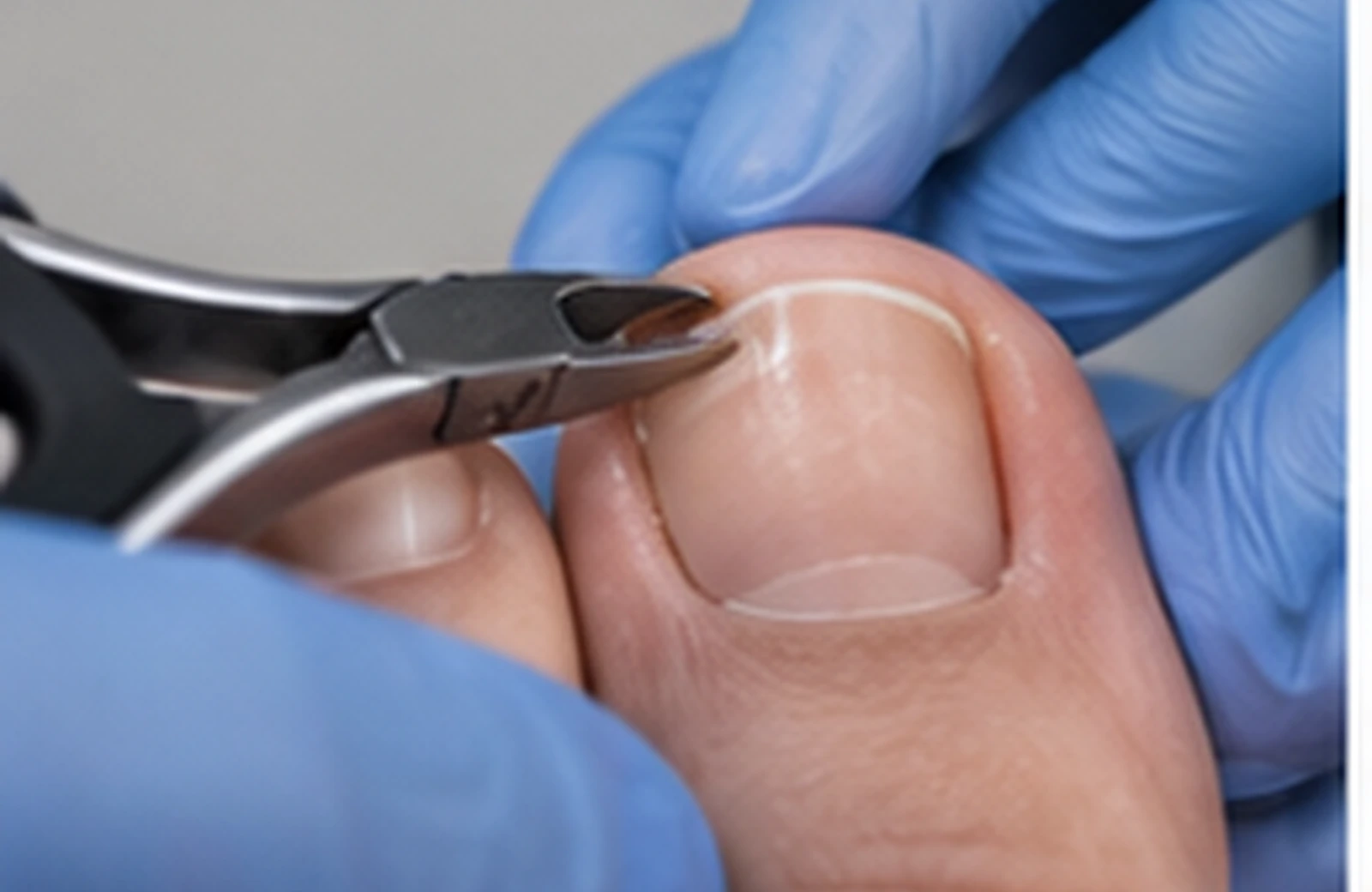
3. The problem nail border is separated and removed
In most cases, the entire nail does not need to come off. A narrow strip along the ingrown side is separated from the nail bed and removed from the growth area to the tip.
This partial approach preserves most of the visible nail while eliminating the edge that is cutting into the skin.
4. The nail matrix may be treated if recurrence is the problem
The matrix is the growth tissue that produces the nail. If the clinician simply removes the nail edge and leaves the matrix intact, that strip can regrow.
For recurrent or more severe ingrown toenails, a partial matrixectomy may be performed. One common method uses phenol to chemically treat the corresponding portion of the matrix so that strip is much less likely to regrow.
A 2023 systematic review and meta-analysis of randomized trials found very-low-certainty evidence that adding phenol to nail avulsion substantially reduced recurrence compared with avulsion alone. The evidence base is imperfect, but recurrence prevention is the main reason matrix treatment is considered.
5. The toe is dressed
After the procedure, the toe is cleaned and covered. The clinician provides specific instructions on wound care, footwear, activity, and when to return if healing does not look right.
Does ingrown toenail removal hurt?
The anesthetic injection is typically the most uncomfortable portion. Once numbness is established, patients should not experience sharp procedural pain.
After the anesthetic wears off, soreness is expected. The amount varies with how inflamed the toe was before treatment and whether matrix treatment was performed.
Do not judge your expected experience from social-media procedure videos. The useful questions are whether adequate anesthesia is used, what portion of the nail is being treated, and what aftercare is recommended for your case.
Will the whole toenail be removed?
Usually not.
Partial nail avulsion is commonly preferred because it removes the offending edge while preserving the majority of the nail. Total nail removal may be appropriate in selected situations, but it is not the default simply because one border is ingrown.
If appearance matters to you, ask exactly how much nail width is expected to remain after healing.
How long does recovery take?
Recovery has two different timelines:
Functional recovery: Many patients can walk immediately and resume routine activities relatively quickly, depending on discomfort, footwear, job demands, and the procedure performed.
Wound healing: The treated nail fold and matrix area take longer to fully settle. Drainage or sterile exudate can persist during healing, particularly after chemical matrixectomy.
AAFP guidance notes that the toe is commonly rested and elevated for the first 12 to 24 hours, with normal ambulation often resumed afterward. Individual instructions should take priority over generic timelines.
When can you return to running, the gym, or sports?
There is no universal “48-hour” rule that fits every patient.
Return depends on:
- pain and drainage
- the sport
- shoe pressure on the toe
- whether the nail fold is still raw
- risk of contamination
- whether a matrixectomy was performed
Walking in a roomy shoe is different from sprinting, soccer, hiking, or a long run in a snug toe box. Resume activity based on wound status and clinician instructions rather than a calendar alone.
Do you need antibiotics?
Not automatically.
An inflamed ingrown toenail often looks infected because the nail edge is acting as a persistent mechanical irritant. AAFP guidance states that oral antibiotics are generally not recommended unless there is cellulitis or another clear indication.
Removing the offending nail edge can allow localized inflammation to resolve. Antibiotic decisions should be based on the actual exam, not simply redness at the nail border.
What are the possible complications?
Ingrown toenail procedures are generally well tolerated, but potential problems include:
- recurrence
- delayed healing
- infection
- prolonged drainage
- nail dystrophy or an irregular regrown edge
- excessive narrowing of the nail
- rare injury to surrounding tissue
People with poor circulation, neuropathy, uncontrolled diabetes, or impaired healing require more individualized planning.
How do you reduce the chance it comes back?
If the problem is recurrent, recurrence prevention has two parts.
Treat the responsible nail edge appropriately
A matrix procedure may be considered when the same border repeatedly returns. Repeatedly cutting out the corner at home can temporarily relieve pressure without changing the growth pattern.
Reduce avoidable mechanical pressure
Helpful habits may include:
- trimming nails straight across rather than digging down the corners
- avoiding excessively short trimming
- choosing shoes with enough toe-box room
- managing repeated toe trauma from running, court sports, or work footwear
Some people have naturally curved or wide nail plates and can still recur despite careful trimming. Recurrence is not always a hygiene or grooming failure.
Frequently asked questions
How long does the numbing last?
The duration varies with the anesthetic and individual response. Your clinician can tell you what was used and what to expect. Protect the numb toe from accidental trauma until normal sensation returns.
Can I drive after ingrown toenail removal?
That depends on which toe was treated, the dressing, footwear, anesthetic, and your ability to operate pedals safely. Do not assume you can drive immediately after a procedure on the right foot; ask before treatment if transportation is a concern.
Will the nail look normal after a matrixectomy?
A partial matrixectomy intentionally prevents one narrow strip of nail from returning, so the healed nail will usually be somewhat narrower. The objective is to preserve the functional and cosmetic nail while preventing the painful border from regrowing.
What if the toe is infected before the procedure?
Localized inflammation is common. The clinician will determine whether there is true cellulitis or another reason for antibiotics and whether the procedure can proceed. Severe infection or high-risk medical conditions may require a modified plan.
Is phenol always used?
No. Chemical matrixectomy is one of several methods. Surgical, chemical, electrosurgical, and other approaches exist. Technique should be selected according to the nail, patient factors, recurrence history, and clinician judgment.
Ingrown toenail treatment in Tempe, Arizona
If an ingrown toenail is painful, draining, repeatedly returning, or making shoes and activity difficult, an examination can determine whether conservative care, partial nail removal, or matrix treatment is appropriate. Metro Foot & Ankle provides ingrown toenail treatment in Tempe for patients throughout the East Valley.
To have a painful or recurrent nail evaluated, request an appointment.
This article is for general educational purposes and does not replace individualized medical advice, diagnosis, or treatment.
Sources
- Exley V, Jones K, O'Carroll G, Watson J, Backhouse M. A systematic review and meta-analysis of randomised controlled trials on surgical treatments for ingrown toenails part I: recurrence and relief of symptoms. Journal of Foot and Ankle Research. 2023;16:35. https://pubmed.ncbi.nlm.nih.gov/37301845/ (opens in a new tab)
- Vinay K, Ravivarma VN, Thakur V, et al. Efficacy and safety of phenol-based partial matricectomy in treatment of onychocryptosis: A systematic review and meta-analysis. Journal of the European Academy of Dermatology and Venereology. 2022;36(4):526-535. https://doi.org/10.1111/jdv.17871 (opens in a new tab)
- Mayeaux EJ Jr, Carter C, Murphy TE. Ingrown Toenail Management. American Family Physician. 2019;100(3):158-164. https://www.aafp.org/pubs/afp/issues/2019/0801/p158.html (opens in a new tab)