
Treatment
Platelet-Rich Plasma (PRP) Injections
Metro Foot & Ankle offers platelet-rich plasma (PRP) injections, used selectively for appropriate musculoskeletal conditions after evaluation.
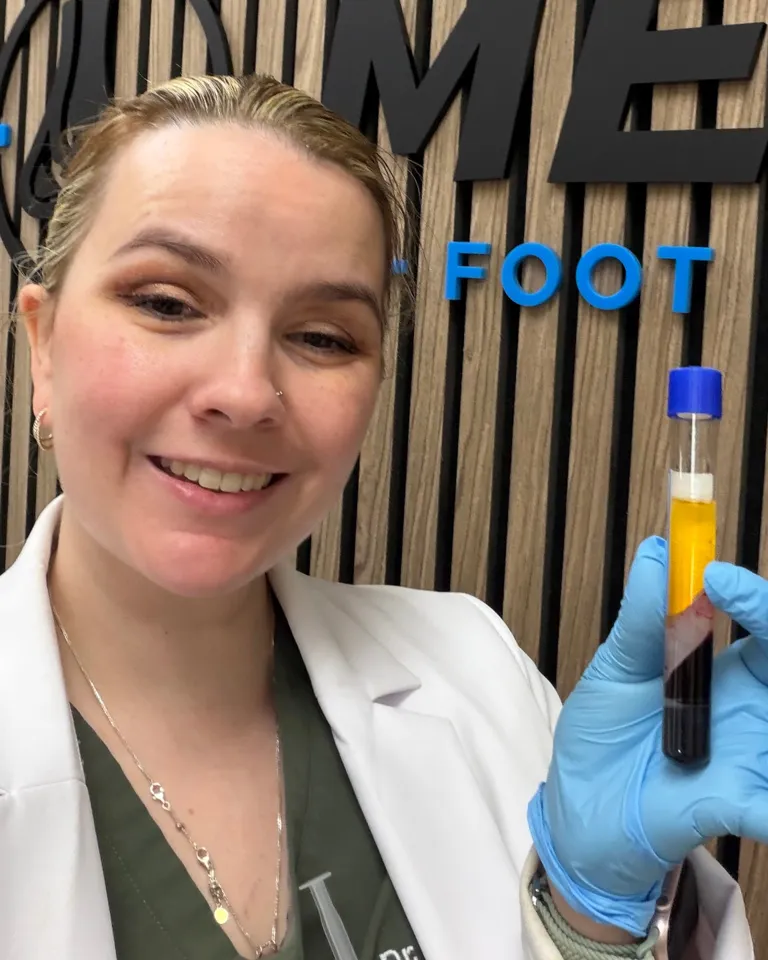
Platelet-rich plasma is prepared from a patient's own blood. Blood is drawn and processed to separate and concentrate platelets in plasma, and the prepared material may then be injected into a selected treatment area.
Platelets contain proteins and growth factors involved in normal healing processes. The exact composition of PRP preparations varies, and clinical results vary by condition, preparation method, injection technique, and patient factors.
Metro Foot & Ankle offers PRP. It is used selectively for appropriate musculoskeletal conditions after evaluation, not as a routine treatment for every foot or ankle problem.
Whether this option is appropriate for you is determined during an in-person evaluation, not from a website.
When this may be discussed
PRP may be discussed for selected musculoskeletal conditions after evaluation. Evidence and expected benefit vary by diagnosis, and it is not equally established for every foot or ankle problem.
AAOS describes the evidence as promising for selected chronic tendon conditions but insufficient to establish effectiveness for many other uses.
Evaluation and candidacy
A clinical evaluation is required to determine whether PRP is a reasonable option, including the diagnosis, what has already been tried, and your health history.
What a visit may involve
- We confirm the diagnosis and review what has already been tried.
- Care is provided in our Tempe office.
- Dr. Wright explains what the option involves and what the alternatives are.
- We reassess your response and adjust the overall plan accordingly.
Limitations
PRP cannot be described as rebuilding or regenerating tissue as a guaranteed result. Comparative studies are diagnosis-specific and do not support universal claims of superiority over other treatments.
Insurance coverage varies and cannot be promised.
Risks and considerations
Risks and alternatives require an individualized clinical discussion, which happens at your visit rather than on a website.
Alternatives
Alternatives depend on the diagnosis and may include continued conservative care, rehabilitation, orthotic support, Shockwave Therapy, or other options.
Frequently asked questions
What is PRP made from?
It is prepared from your own blood by drawing it and processing it to concentrate platelets in plasma.
Does PRP work for my condition?
Evidence varies by diagnosis. It is described as promising for selected chronic tendon conditions and insufficient for many other uses.
Is PRP covered by insurance?
Coverage varies by plan and cannot be promised. Our staff can help you check your specific policy.
Your next step
To ask whether platelet-rich plasma (prp) injections fits your situation, request an appointment or call 480-831-0700. New to the practice? Start with new-patient information.
Related pages
Sources(show)
- AAOS OrthoInfo — Platelet-Rich Plasma (PRP)Preparation process, platelet and growth-factor description, and research limitations.
- Systematic review (2024) — Platelet-Rich Plasma Compared With Shockwave Therapy for Plantar FasciitisComparative evidence is diagnosis-specific and does not support universal superiority.
- AAOS OrthoInfo — Plantar Fasciitis and Bone SpursPRP may be discussed among selected options, with more research needed.
Request an appointment
Our Tempe office schedules new and established patients Monday through Friday. Book online, or call and we will help you find a time.
Metro Foot & Ankle — Tempe office
3231 S Country Club Way, Suite 108
Tempe, AZ 85282
Fax 480-831-0748
Suite 108 is on the ground floor of the office complex, marked with Metro Foot & Ankle signage and our phone number on the window. Parking is available on site.
Office hours
- Monday – Friday
- 8:00 a.m. – 12:00 p.m., 1:00 p.m. – 5:00 p.m. (closed for lunch 12–1 p.m.)
- Saturday & Sunday
- Closed
Please do not send medical details, records, or images through this website. Call the office to discuss anything clinical.