By Dr. Kayla Wright, DPM
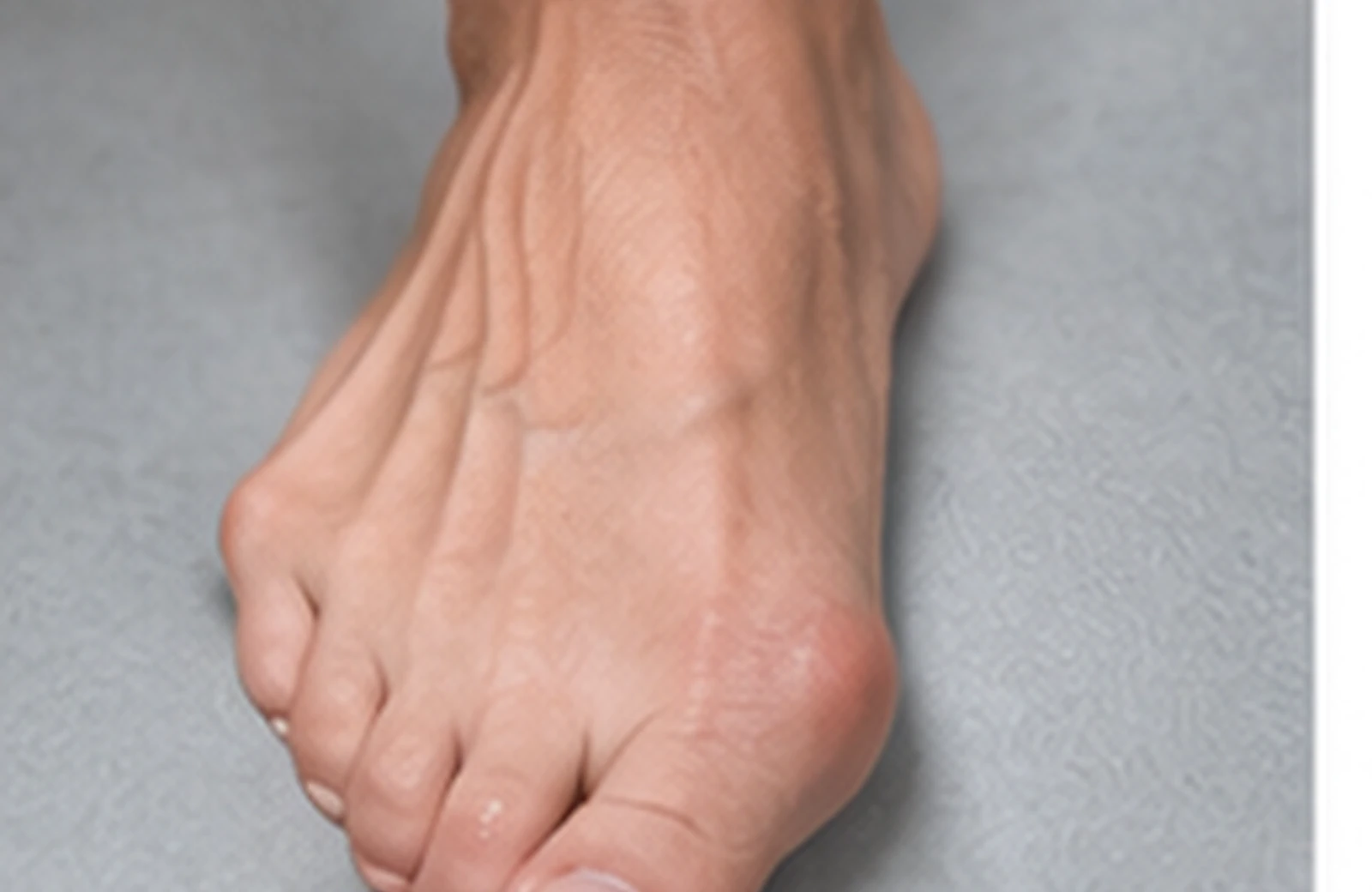
That distinction matters because hallux valgus is more than a surface “bump.” The big toe and first metatarsal gradually shift out of alignment, and the surrounding joint, soft tissues, and neighboring toes can become involved. Surgery can correct that alignment, but it also requires recovery and carries risks. The right time is therefore a function-and-symptom decision, not a cosmetic threshold.
Seven signs a bunion-surgery conversation may be reasonable
These are not seven automatic indications for surgery. They are signs that it may be worth discussing surgical correction rather than repeatedly treating symptoms without addressing the deformity.
1. Pain is persistent, not just occasional shoe irritation
A bunion that aches only after one pair of narrow shoes is different from a bunion that hurts during ordinary walking in appropriately fitting footwear.
A surgical discussion becomes more reasonable when pain is:
- recurring most days
- present during routine walking or standing
- limiting exercise or work
- disrupting activities you value
- continuing despite changes in footwear and other conservative measures
Pain severity matters, but what the pain prevents you from doing is often more informative.
2. Reasonable shoes are becoming difficult to wear
Many bunions can be managed for years by changing footwear. A wider toe box, softer upper, and avoiding pressure directly over the prominence may substantially improve comfort.
The issue changes when the foot no longer fits comfortably in reasonable shoes because of the deformity—not simply because a patient wants to wear a very narrow style.
If accommodating the bunion requires increasingly unusual footwear or you still have significant pain in properly fitted shoes, that is a meaningful functional limitation.
3. You have genuinely tried nonsurgical treatment and are still limited
Nonsurgical treatment can be worthwhile even though it does not reliably reverse the underlying bony alignment.
Options may include:
- wider, better-fitting footwear
- padding over pressure points
- selected toe spacers or orthoses
- activity modification during flares
- treatment of associated calluses or forefoot overload
- exercises or rehabilitation when another mechanical problem is contributing
Evidence for braces, separators, and orthoses is mixed; some studies show improvements in pain or alignment measures in selected patients, but they should not be presented as a dependable permanent correction of established hallux valgus.
If a thoughtful conservative plan keeps you comfortable, surgery may not be necessary. If symptoms remain unacceptable, the decision changes.
4. The bunion is beginning to interfere with the second toe
Progressive hallux valgus can crowd the lesser toes. Depending on the foot, this may contribute to:
- second-toe drifting
- overlapping or underlapping toes
- hammertoe deformity
- pain beneath the second metatarsal head
- calluses from altered pressure
- irritation around the second metatarsophalangeal joint
This does not mean every bunion should be operated on before another toe changes. It means neighboring-toe involvement is part of the whole-foot decision and may make the problem more complex than an isolated bump.
5. The big-toe joint is becoming increasingly painful or difficult to use
Some patients describe the problem as pressure over the bump. Others develop pain within the big-toe joint itself, stiffness, or difficulty pushing off during walking.
An examination and weight-bearing X-rays help determine whether symptoms are primarily from:
- the hallux valgus deformity
- arthritis of the first metatarsophalangeal joint
- sesamoid problems
- inflammation from shoe pressure
- another forefoot condition
That distinction matters because the best procedure for one problem may be inappropriate for another.
6. The deformity is progressing and symptoms are progressing with it
Bunions can progress, but not every bunion worsens at the same speed.
A changing foot shape becomes more important when it is accompanied by increasing pain, shoe problems, transfer pressure, or neighboring-toe symptoms. Serial examination and weight-bearing X-rays can help document progression when the history is unclear.
Progression alone does not create an automatic surgical deadline. It adds information to the risk-benefit discussion.
7. You understand the recovery and still believe correction is worth it
This is the sign that generic “when do I need surgery?” articles often leave out.
Bunion surgery is elective in most cases. The decision should account for:
- the expected period of protected weight-bearing or activity modification
- work and caregiving demands
- driving limitations depending on the side and procedure
- swelling that may persist for months
- rehabilitation needs
- the procedure's specific risks
- the possibility of recurrence
- your goals for walking, sport, footwear, and pain relief
A patient with significant symptoms who cannot accommodate postoperative restrictions right now may appropriately delay surgery. Another patient with the same X-ray may decide that the functional limitation already outweighs the recovery burden.
What surgery actually changes
Bunion surgery is not simply shaving off a bump.
The goal is usually to realign the bones and joint, which may involve an osteotomy (cutting and repositioning bone), fusion in selected cases, and soft-tissue balancing. The exact procedure depends on the deformity, joint condition, first-ray mechanics, patient factors, and surgeon assessment.
Both open and minimally invasive approaches are used. AAOS notes that minimally invasive techniques may offer advantages such as less early swelling or faster early recovery in some patients, while long-term outcomes can be similar to traditional approaches. “Minimally invasive” does not mean minimal recovery, and it is not appropriate for every bunion.
How successful is bunion surgery?
Surgery can meaningfully improve pain and function in appropriately selected patients. An older randomized trial comparing surgery, orthoses, and watchful waiting found better one-year pain, footwear, function, and satisfaction outcomes in the surgical group for patients with painful hallux valgus.
But success should not be translated into “the bunion can never come back.” Long-term systematic reviews show that recurrence occurs after some hallux valgus procedures, and the reported rate depends heavily on the definition of recurrence, surgical technique, length of follow-up, and deformity characteristics.
A useful preoperative conversation therefore includes both:
What are we trying to improve? Pain, shoe tolerance, alignment, function, or a combination.
What can this specific operation realistically deliver—and what can it not guarantee?
Do you have to wait until the bunion is “severe”?
No universal X-ray number tells every patient when to have surgery.
Severity on weight-bearing X-rays helps choose a procedure, but the indication to treat is patient-centered. Clinical guidelines emphasize symptoms, patient burden, joint condition, deformity pattern, and individual factors rather than a single threshold.
A moderate deformity that makes walking miserable can deserve more attention than a dramatic-looking bunion that is painless.
Can you wait too long?
There is no one deadline that applies to everyone.
However, if a symptomatic deformity progresses, other structures can become involved, the joint may develop degenerative change, and lesser-toe problems may complicate treatment. That does not mean “operate early.” It means persistent, progressive symptoms deserve an informed evaluation rather than years of automatically repeating the same temporary measures.
Frequently asked questions
Should I have bunion surgery just because the bunion looks bad?
Usually not. Cosmetic appearance alone is not the usual reason to operate. AAOS recommends considering surgery for a painful bunion, particularly when pain and walking difficulty continue despite nonsurgical treatment.
Do bunion splints or toe spacers prevent surgery?
They may improve comfort or temporarily change toe position while worn, and selected orthotic approaches may help symptoms. Current evidence does not support promising that a brace or spacer will permanently reverse an established structural bunion.
Is minimally invasive bunion surgery always better?
No. Minimally invasive techniques are useful for selected patients and deformities, but procedure choice should follow the anatomy and goals—not the size of the incision. Long-term outcomes can be similar to open approaches, and both require bone healing and postoperative management.
Will a bunion come back after surgery?
It can. Recurrence rates vary considerably by procedure, deformity severity, measurement definition, follow-up duration, and patient factors. The goal is to choose a correction appropriate to the deformity and discuss recurrence honestly before surgery.
How do I know which bunion operation I need?
That cannot be determined from the visible bump alone. Weight-bearing X-rays, joint condition, degree and location of deformity, first-ray mechanics, symptoms, activity demands, and other factors guide procedure selection.
Bunion evaluation in Tempe
If a bunion is limiting walking, exercise, shoes, or daily activity despite reasonable conservative care, the next step does not have to be “schedule surgery.” It can simply be a decision-quality visit: confirm the source of symptoms, understand the deformity on weight-bearing imaging, review nonsurgical options that remain reasonable, and discuss what surgery would actually involve if you are a candidate.
Metro Foot & Ankle evaluates bunions and hallux valgus in Tempe and the East Valley. If you want a clearer answer about whether continued conservative care or surgical correction makes sense for your situation, request an evaluation.
This article is for general educational purposes and does not replace individualized medical advice, diagnosis, or treatment.
Sources
- American Academy of Orthopaedic Surgeons. Bunions. OrthoInfo. https://orthoinfo.aaos.org/en/diseases--conditions/bunions/ (opens in a new tab)
- Watanabe K, Kubota M, Tanaka H, et al. Japanese Orthopaedic Association Clinical Practice Guidelines on the Management of Hallux Valgus — Secondary publication. Journal of Orthopaedic Science. 2024;29(1):1-26. https://pubmed.ncbi.nlm.nih.gov/37451976/ (opens in a new tab)
- Torkki M, Malmivaara A, Seitsalo S, et al. Surgery vs orthosis vs watchful waiting for hallux valgus: a randomized controlled trial. JAMA. 2001;285(19):2474-2480. https://pubmed.ncbi.nlm.nih.gov/11368700/ (opens in a new tab)
- Kwan MY, Yick KL, Yip J, Tse CY. Hallux valgus orthosis characteristics and effectiveness: a systematic review with meta-analysis. BMJ Open. 2021;11:e047273. https://pubmed.ncbi.nlm.nih.gov/34408037/ (opens in a new tab)
- Lalevee M, Saffarini M, van Rooij F, et al. Recurrence rates with long-term follow-up after hallux valgus surgical treatment using shaft metatarsal osteotomies: a systematic review and meta-analysis. EFORT Open Reviews. 2024;9(10):933-940. https://pubmed.ncbi.nlm.nih.gov/39360793/ (opens in a new tab)