
Condition
Geriatric Foot Care
Foot care needs change with age. Comfortable, stable footwear and prompt attention to new problems both matter.
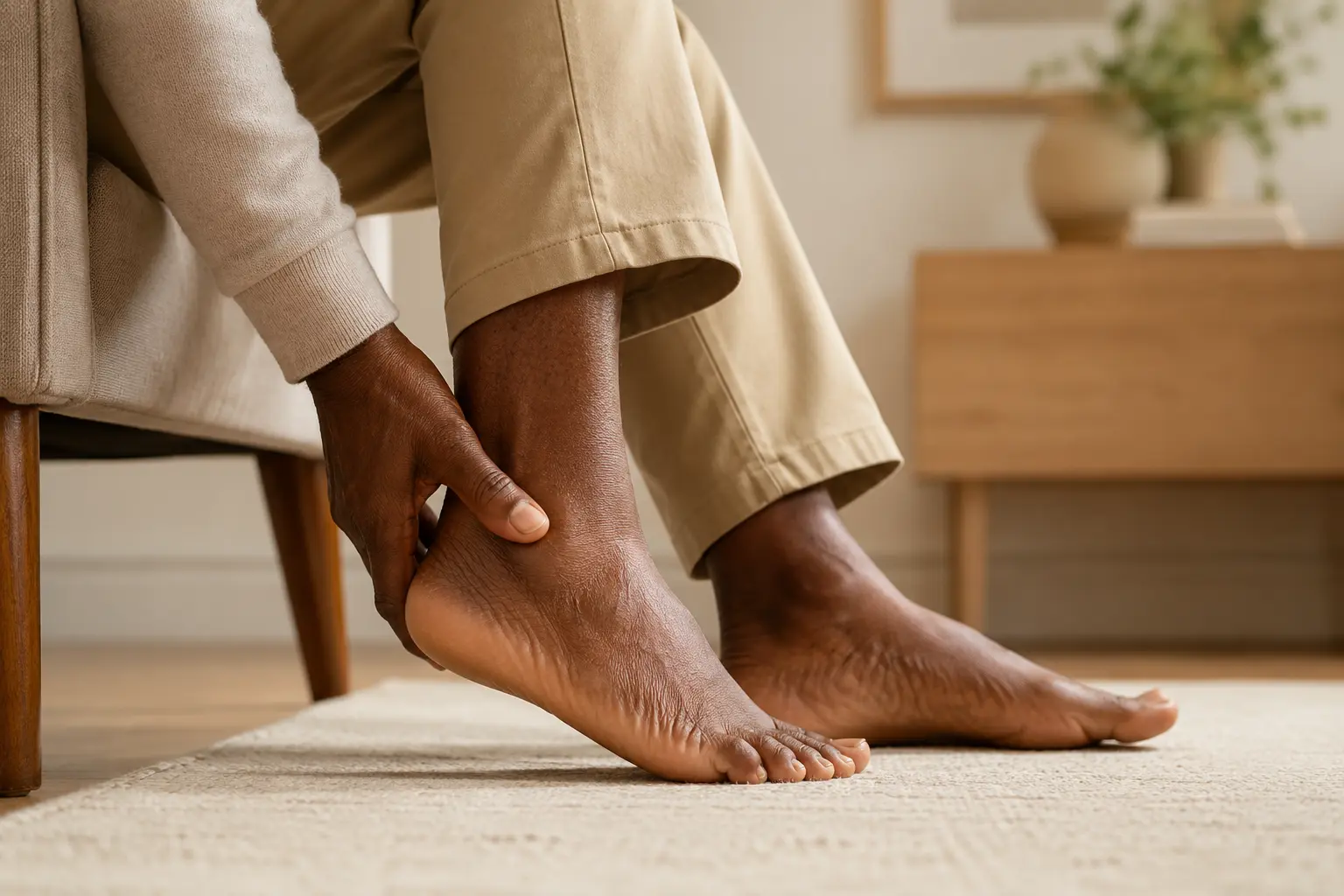
Aging can be associated with changes in skin, nails, joints, balance, mobility, foot shape, and the ability to perform self-care.
Foot pain, arthritis, corns, bunions, hammertoes, neuropathy, poor circulation, and unsafe footwear can all interfere with walking or balance. Foot care is one part of managing fall risk, which has many contributing factors.
This page is general education. Symptoms described on a website cannot establish a diagnosis, and an in-person examination is what identifies the cause of your symptoms and what to do about it.
Common signs and symptoms
- New or persistent foot pain
- Wounds or skin color changes
- Swelling
- Changes in sensation
- Difficulty reaching the feet for self-care
- Shoes that no longer fit or feel unstable
Possible causes and contributing factors
- Age-related changes in skin, nails, and joints
- Arthritis and structural changes such as bunions or hammertoes
- Neuropathy or reduced circulation
- Footwear that fits poorly or feels unstable
How Metro Foot & Ankle evaluates geriatric foot care
- We review your symptoms, activity or injury history, footwear, and medical history.
- We examine the skin, nails, foot structure, sensation, circulation, and footwear along with the surrounding joints and the way you walk.
- We use X-rays or other testing when the findings make it clinically appropriate.
- We explain what we found and what the reasonable options are for your situation.
You will see Dr. Kayla Wright, DPM, ABFAS Board Certified, at our Tempe office. New to the practice? Review new-patient information before your visit.
General treatment progression
Shoes should fit well, feel stable, provide appropriate support, have adequate toe room, and reduce slipping risk. Both feet should be measured because size may differ, and shoes should be selected for the larger foot.
- Evaluation of the feet, footwear, and self-care ability
- Regular self-inspection and prompt reporting of new problems
- Footwear guidance based on fit, stability, support, and toe room
- Professional foot care where reaching the feet is difficult or risk is higher
- Coordination with your other care for balance and mobility concerns
Older adults with diabetes, poor circulation, neuropathy, open wounds, or significant nail problems may particularly benefit from professional foot care.
When prompt evaluation may be appropriate
Some foot and ankle symptoms should be evaluated promptly rather than watched. Call our office if you notice:
- An injury with difficulty walking or bearing weight
- A change in the shape or appearance of the foot or ankle after a fall or twist
- Redness, warmth, drainage, or signs of infection
- An open sore or wound on the foot, especially with diabetes or circulation concerns
- New numbness, burning, or other changes in sensation
- Pain that keeps getting worse or does not improve with reasonable initial care
If you are experiencing a medical emergency, call 911 immediately. This website and its appointment tools are not monitored for emergency medical needs.
Frequently asked questions
Is foot pain just part of getting older?
No. Age-related changes are common, but foot pain is a reason to be evaluated rather than something to accept.
Will better shoes prevent falls?
Footwear is one factor among many. Falls are multifactorial, and foot care is one part of managing that risk rather than a way to prevent every fall.
How should shoes be fitted?
Both feet should be measured because size may differ, and shoes should be selected for the larger foot.
Your next step
To be seen for geriatric foot care, request an appointment or call 480-831-0700. Our office is at 3231 S Country Club Way, Suite 108, in Tempe — see directions and parking.
Related pages
Sources(show)
- NIH MedlinePlus — Foot HealthRegular inspection, properly fitting footwear, and nail-care principles.
- American Podiatric Medical Association — Balance-Boosting Footwear Tips for Older PeopleStable footwear, measuring both feet, and fitting to the larger foot.
- National Institute on Aging — Tips for Getting and Staying Active as You AgeSafe, well-fitting, supportive shoes for physical activity.
- NIH MedlinePlus — Fall Risk AssessmentFoot problems and unsafe footwear contribute to fall risk, which is multifactorial.
Request an appointment
Our Tempe office schedules new and established patients Monday through Friday. Book online, or call and we will help you find a time.
Metro Foot & Ankle — Tempe office
3231 S Country Club Way, Suite 108
Tempe, AZ 85282
Fax 480-831-0748
Suite 108 is on the ground floor of the office complex, marked with Metro Foot & Ankle signage and our phone number on the window. Parking is available on site.
Office hours
- Monday – Friday
- 8:00 a.m. – 5:00 p.m.
- Saturday & Sunday
- Closed
Please do not send medical details, records, or images through this website. Call the office to discuss anything clinical.