
By Dr. Kayla Wright, DPM
That distinction is not legal fine print. It is essential information for deciding whether laser is worth considering.
First, make sure the nail is actually fungal
Before comparing treatments, confirm the diagnosis.
Thick, yellow, brittle, or lifted nails can also result from:
- repetitive shoe trauma
- prior bruising
- psoriasis
- other inflammatory nail disease
- age-related dystrophy
- bacterial changes
- less common nail disorders
AAFP's evidence review recommends confirmatory testing before treatment when possible, particularly before oral antifungal therapy. Depending on the case, testing may use microscopy, culture, histopathology, or molecular methods.
If you are not sure whether the nail is fungal, read toenail fungus or nail trauma: how doctors tell the difference.
What does FDA clearance for nail-fungus lasers actually mean?
As of 2026, FDA's product classification for this device category defines the intended use as a temporary increase of clear nail in patients with onychomycosis.
That wording matters because several outcomes can be confused in marketing:
- clear-nail improvement: more normal-looking nail becomes visible
- clinical cure: the nail meets a study's threshold for normal/near-normal appearance
- mycological cure: fungal testing becomes negative
- complete cure: both clinical and mycological endpoints are met
A device can improve appearance without producing complete eradication of fungal infection.
What does the research on laser therapy show?
The evidence is mixed and highly heterogeneous.
A 2019 systematic review and meta-analysis of prospective trials included 22 studies and 755 participants. It reported pooled improvement in mycological and clinical outcomes, but complete cure was much lower, and heterogeneity across studies was high. The authors concluded that the evidence was limited and that larger, better-designed randomized trials were needed.
A 2024 systematic review/meta-analysis comparing laser with other treatments described laser as promising, but again called for larger randomized studies before treating it as established standard therapy.
A 2023 systematic review of device-based onychomycosis treatments similarly emphasized that nail fungus is difficult to cure and that device evidence varies considerably by technology and study design.
So the defensible conclusion is:
Laser has evidence of benefit for selected patients, particularly in nail appearance and some mycological outcomes, but the evidence is less standardized and less mature than the evidence base for established antifungal medications.
How does laser compare with oral terbinafine?
When dermatophyte onychomycosis is confirmed and systemic therapy is medically appropriate, oral terbinafine is generally considered first-line because of its effectiveness and established evidence base.
That does not make oral therapy the right choice for every patient. The decision may be influenced by:
- liver disease
- drug interactions
- other medical conditions
- extent of nail involvement
- organism
- patient preference
- previous treatment failure
Laser becomes particularly interesting when a patient wants to avoid systemic medication or cannot take it safely—but lower medication burden should not be confused with superior cure evidence.
What about topical antifungal treatment?
Topical prescription therapies avoid systemic exposure but generally require prolonged application and tend to be most suitable for less extensive disease.
Disease severity matters. AAFP summarizes topical therapy as more appropriate when nail involvement is limited, while more extensive disease or matrix involvement often favors oral treatment when appropriate.
Laser may also be used in combination with topical therapy in some practices. A 2022 systematic review found evidence favoring combined laser plus topical treatment over some comparator approaches, but protocols varied.
What does the treatment feel like?
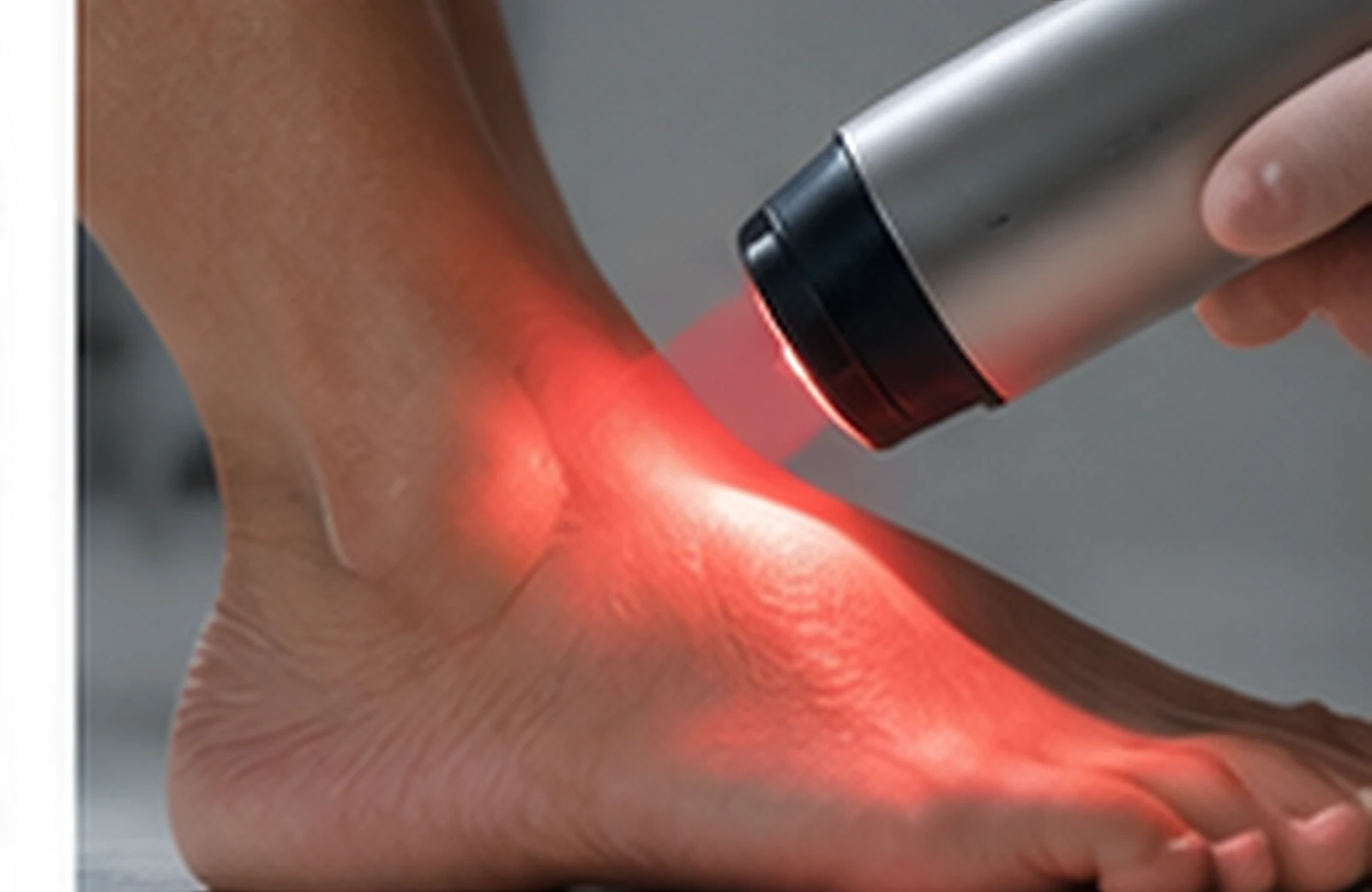
Experience depends on the exact device and settings. Patients may feel warmth, heat, or brief discomfort during treatment. Treatment is typically performed without an incision, and there is usually little functional downtime.
However, the phrase “laser therapy” includes different wavelengths, devices, pulse characteristics, and protocols. Before paying for treatment, ask:
- What exact laser is being used?
- What is its FDA-cleared indication?
- How many sessions are proposed?
- How will success be measured?
- Is fungal confirmation required first?
- What happens if the nail does not respond?
Those questions are more useful than asking whether a clinic “has a laser.”
Why improvement takes months to see
Even if the fungal burden improves, the existing damaged nail does not instantly transform into healthy nail.
Toenails grow slowly. The visible result depends on healthier nail growing forward from the base while the old dystrophic portion gradually moves toward the tip. Great-toenail replacement can take a year or longer.
That is why a photo taken a few weeks after treatment is a poor measure of final outcome.
Why nail fungus comes back
Recurrence and reinfection are common regardless of treatment.
Risk reduction may include:
- treating concurrent athlete's foot
- keeping feet and footwear dry
- changing socks when damp
- disinfecting or replacing contaminated footwear when appropriate
- avoiding shared nail instruments
- controlling diabetes when applicable
- addressing repeated nail trauma
A successful treatment does not create lifelong immunity to fungus.
When laser may be a reasonable option
Laser may be worth discussing when:
- onychomycosis has been reasonably confirmed
- oral antifungals are contraindicated, undesirable, or have failed
- the patient understands the difference between clearer nail and complete cure
- expectations about cost and repeat treatment are realistic
- the exact device and protocol are known
It is less compelling when the diagnosis itself is uncertain or when the treatment is being sold with guarantees that exceed regulatory or clinical evidence.
Frequently asked questions
Is laser treatment for toenail fungus FDA approved?
FDA regulates specific devices and indications. The relevant product classification for these lasers is temporary increase of clear nail in patients with onychomycosis. Ask which exact device is being used and review its clearance rather than assuming all nail lasers have identical claims.
Does laser kill toenail fungus?
Some studies report improved mycological outcomes, but treatment response varies and the FDA-cleared claim is not “eradication” or guaranteed cure. It is more accurate to discuss probability of improvement and how success will be measured.
Is laser safer than oral medication?
Laser avoids systemic drug exposure and drug interactions, which can be advantageous for selected patients. But “safer” depends on the individual's health, medications, treatment device, and disease severity. Oral terbinafine remains appropriate for many patients after medical screening.
How many laser sessions will I need?
There is no universal evidence-based number because devices and protocols differ. The proposed treatment schedule should be tied to the specific technology being used.
Can laser be combined with antifungal medication?
Yes, combination approaches have been studied. Whether combination treatment makes sense depends on disease severity, medication suitability, prior response, and the evidence for the specific protocol.
Will my nail look normal immediately?
No. Even if treatment is effective, the damaged nail has to grow out. Visible improvement is measured over months rather than days.
Toenail fungus treatment decisions in Tempe
If you are considering laser, oral medication, topical treatment, or a combination, start by confirming that the nail change is actually fungal and determining the extent of disease. Metro Foot & Ankle evaluates toenail fungus and treatment options for patients in Tempe and the East Valley.
For a diagnosis-focused discussion of options and expectations, request an evaluation.
This article is for general educational purposes and does not replace individualized medical advice, diagnosis, or treatment.
Sources
- U.S. Food and Drug Administration. Product Classification: Lasers for temporary increase of clear nail in patients with onychomycosis (Product Code PDZ). https://www.accessdata.fda.gov/scripts/cdrh/cfdocs/cfPCD/classification.cfm?ID=PDZ (opens in a new tab)
- U.S. Food and Drug Administration. Onycho Laser V 510(k) Summary — Indications for Use. K241116. https://www.accessdata.fda.gov/cdrh_docs/pdf24/K241116.pdf (opens in a new tab)
- Yeung K, Ortner VK, Martinussen T, Paasch U, Haedersdal M. Efficacy of laser treatment for onychomycotic nails: a systematic review and meta-analysis of prospective clinical trials. Lasers in Medical Science. 2019;34(8):1513-1525. https://pubmed.ncbi.nlm.nih.gov/31254131/ (opens in a new tab)
- Meretsky CR, Friday BL, Schiuma AT. Efficacy of Laser Therapy in Comparison With Other Methods for the Treatment of Onychomycosis: A Systematic Review and Meta-Analysis. Cureus. 2024;16(5):e59720. https://pubmed.ncbi.nlm.nih.gov/38841013/ (opens in a new tab)
- Gupta AK, Hall DC, Simkovich AJ. How Effective Are Devices in the Management of Onychomycosis?: A Systematic Review. J Am Podiatr Med Assoc. 2023;113(1). https://pubmed.ncbi.nlm.nih.gov/36905611/ (opens in a new tab)
- Westerberg DP, Voyack MJ. Onychomycosis: Rapid Evidence Review. American Family Physician. 2021;104(4):359-367. https://www.aafp.org/pubs/afp/issues/2021/1000/p359.html (opens in a new tab)
- Zhang J, Lin P, Li J, et al. Efficacy of laser therapy combined with topical antifungal agents for onychomycosis: a systematic review and meta-analysis of randomised controlled trials. Lasers in Medical Science. 2022;37(6):2557-2569. https://pubmed.ncbi.nlm.nih.gov/35484440/ (opens in a new tab)